




How Does an Intelligent Busway System Improve Data Center Power Distribution?
Release time: 2026-09-30
Table of Contents
As data center infrastructure becomes more modular and power requirements continue to change, the way electricity is routed inside a facility has become an important part of electrical design. A distribution system needs to accommodate high loads, different rack configurations, future expansion, and the practical requirements of installation and maintenance.


Cylon Group, founded in 1999, integrates electrical design, R&D, manufacturing, sales, and service. Its busway solutions are developed for applications where reliable power transmission and structured distribution are required. The company also maintains R&D operations in France and Shanghai and provides technical support covering system design, measurement, installation, testing, and project management.
For data centers, an intelligent busway system can bring power distribution and operating information into the same infrastructure. The CY-S series is designed around this approach, combining a modular busway structure with electrical measurement, temperature monitoring, data storage, communication functions, and configurable solutions.
Why Data Center Power Distribution Requires a Flexible Structure
A data center does not have a fixed electrical demand throughout its entire service life. Server capacity can increase, rack layouts can change, and new equipment may be introduced into an existing space. The distribution system therefore needs to work with both the current installation and possible future requirements.
Traditional cable-based arrangements can become difficult to manage when large numbers of circuits need to be routed across a facility. Separate cable runs can also make changes to the distribution layout more complicated.
A busway provides a defined power distribution route that can be planned alongside the rack arrangement. Power can then be accessed through suitable plug-in units rather than creating a completely new cable route for every change.
This approach is particularly useful when electrical loads are distributed across multiple rows or when a data center needs a structured route for future power connections.
How an Intelligent Busway System Changes Data Center Distribution
A conventional busway is mainly responsible for transporting and distributing electrical power. An intelligent busway system adds an information layer to that distribution infrastructure.
Instead of treating power delivery and system monitoring as completely separate functions, the intelligent system can collect operating information while the busway remains in service.
For the CY-S system, the monitoring platform can track electrical and environmental parameters including power consumption, current, temperature, humidity, and leakage current. The system also supports real-time data visualization and can retain measurement and electrical parameter records for up to one year.
This changes the role of the busway from a simple power route into a more informative part of the electrical distribution system.
Better Matching Between Busway Capacity and Data Center Loads
One of the first considerations in data center power distribution is selecting an appropriate current rating.
The CY-S Smart Duct Series provides rated-current options of 160 A, 250 A, 400 A, and 630 A per phase. It uses a 3P + N + PE configuration, with a rated voltage of 450 V and rated insulation voltage of 690 V. The conductor specification is T2 electrolytic copper, with a stated purity of at least 99.95%.
Having several current configurations allows the distribution system to be matched more closely to the electrical requirements of different areas within a facility.
For example, areas with relatively moderate loads may not require the same busway capacity as sections supporting higher-density equipment. Selecting the appropriate rating at the design stage helps avoid treating the entire distribution network as though every area has identical requirements.
The selection should be based on the actual project load, expected growth, protection requirements, and the design of the upstream and downstream electrical equipment.
Supporting Changes in Rack Layouts
Data center layouts can change as equipment is replaced or additional capacity is introduced. This makes the physical arrangement of the power distribution system an important design consideration.
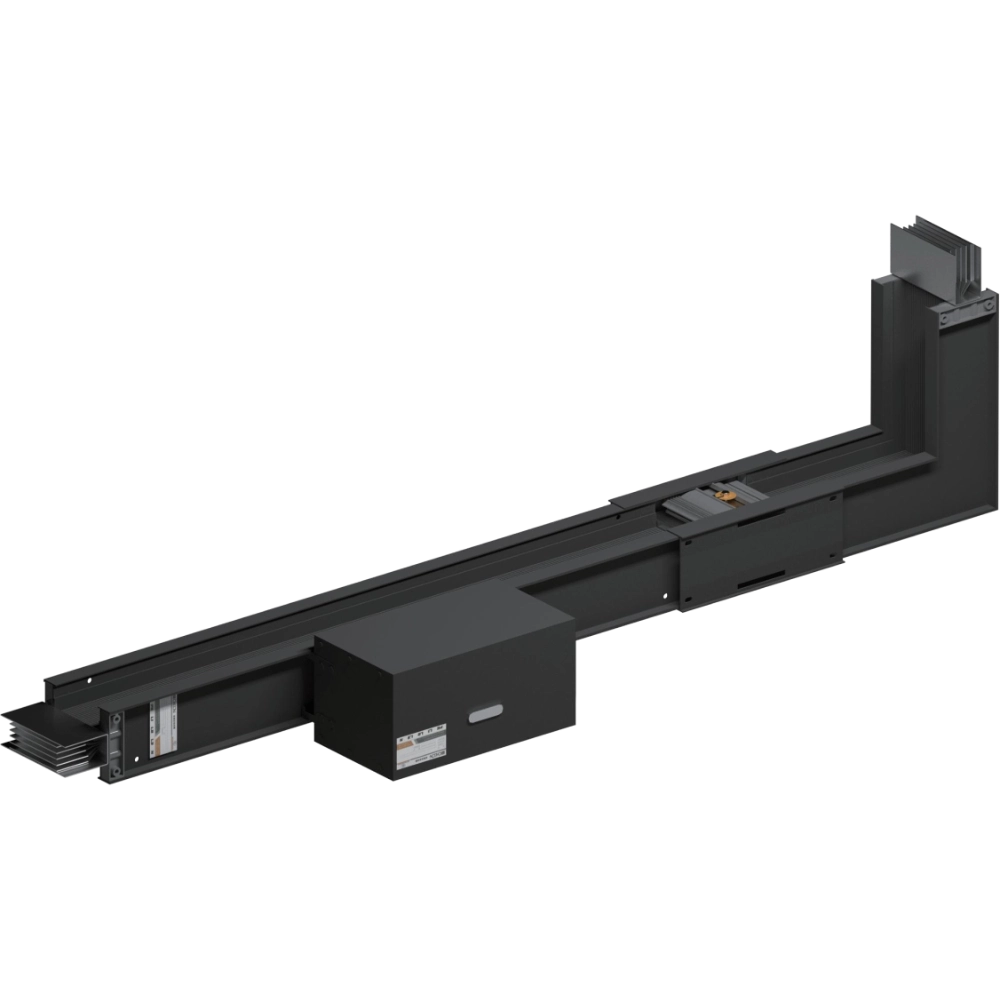
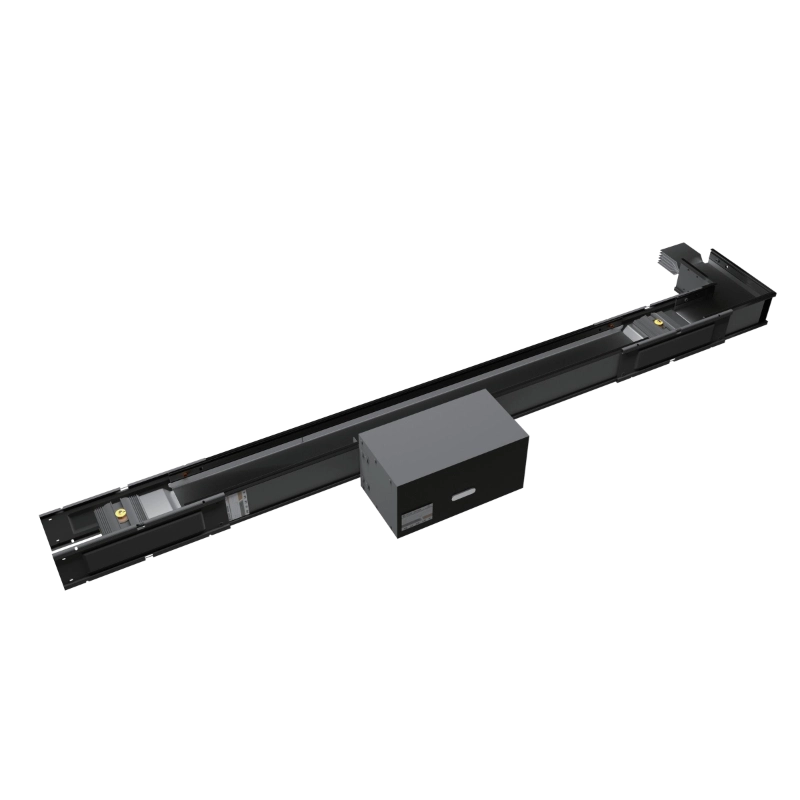
The CY-S system is available in busway lengths of 1 m, 1.5 m, 2 m, and 3 m. Plug-in boxes and related components can be incorporated into the distribution arrangement according to project requirements.
This modular approach gives engineers more options when planning routes around rack positions and available installation space.
Instead of designing a distribution route only for the initial equipment arrangement, the electrical layout can take possible changes into account from the beginning.
That is particularly useful for facilities where rack density or power requirements are expected to change over time.
Real-Time Information Along the Power Route
Power distribution is not only about delivering the required current. Operators also need practical information about how the system is behaving under actual operating conditions.
The CY-S system uses non-invasive full-length temperature monitoring. It can provide temperature distribution information and monitor key points along the busway without changing the basic structure of the power route.
This information can be useful during routine operation because temperature conditions may vary according to electrical load and installation conditions.
The system also provides real-time data tracking and visualization. When combined with historical records, this gives maintenance teams a way to review changes in operating conditions rather than relying only on isolated inspection results.
The purpose is not to replace normal electrical protection or inspection procedures. Instead, monitoring provides additional operating information that can support day-to-day management.
Using Historical Data for Electrical Management
Data becomes more useful when it can be compared over time.
The CY-S platform can store measurements and electrical parameters for up to one year. This allows operators to review historical conditions, identify changes in operating patterns, and use previous data when evaluating maintenance or capacity requirements.
For a data center, this can be useful when electrical demand changes after a rack deployment, equipment replacement, or expansion project.
Historical information can also provide a reference when investigating unusual operating conditions. Rather than looking at a single reading, engineers can compare current information with previous operating periods.
This makes the monitoring function more useful as part of ongoing electrical management.
Communication and Digital Operation
A modern data center may already use different systems for electrical management, facility monitoring, and operational reporting. For this reason, communication capability is an important consideration when selecting an intelligent distribution system.
The CY-S system supports communication functions that can be customized according to project requirements. Integrated meters and communication components can work with backend software for monitoring, energy analysis, fault detection, and operational management.
The exact communication configuration should be determined during project planning. Factors such as the existing monitoring architecture, required data points, communication protocols, and software integration should be considered before equipment is specified.
This helps ensure that the intelligent busway is treated as part of the overall electrical infrastructure rather than as an isolated monitoring device.
What Should Be Considered When Planning Data Center Power Distribution?
Selecting an intelligent busway system for data centers requires more than choosing a current rating.
Several factors should be reviewed together:
Electrical capacity
The rated current should correspond to the actual load requirements and expected future demand. Available current configurations, upstream protection, and short-circuit requirements should be evaluated as part of the complete electrical design.
Physical layout
Busway routes should be planned around rack locations, equipment rooms, available ceiling or overhead space, and maintenance access. Connection points should also be positioned according to the planned distribution layout.
Monitoring requirements
Projects may have different requirements for temperature, current, voltage, power consumption, humidity, leakage current, or other operating parameters. The required monitoring scope should be established before the system is configured.
Communication requirements
If busway data needs to be connected with an existing monitoring or management platform, communication requirements should be confirmed during the design stage.
Future expansion
The initial distribution plan should consider how additional racks or higher loads may affect the system later. A modular arrangement can provide more options when the facility needs to expand.
Installation and testing
The quality of installation has a direct relationship with the final performance of the electrical system. Measurement, connection inspection, insulation testing, commissioning, and pre-power checks should all form part of the project process.
CY-S Intelligent Busway System for Data Centers
The CY-S series combines power distribution with monitoring and communication functions in one busway platform. Its configuration includes 160 A, 250 A, 400 A, and 630 A current options, 3P + N + PE distribution, T2 electrolytic copper conductors, multiple busway lengths, and customizable communication functions.
For data center applications, the system can be planned around the facility’s electrical capacity, rack arrangement, installation conditions, and monitoring requirements.
Its application is not limited to data centers. The same product platform is also intended for industrial manufacturing, commercial buildings, medical and educational facilities, high-rise buildings, and transportation infrastructure.
For projects where power distribution needs to become more structured, measurable, and adaptable, an intelligent busway system provides a way to combine the physical distribution route with operational data.
With experience covering electrical design, manufacturing, quality testing, project management, installation support, and after-sales service, Cylon provides busway solutions for different project requirements. For data centers looking for a configurable distribution system with integrated monitoring and communication capabilities, the CY-S system can be evaluated according to the project’s electrical and operational needs.
FAQ
1. What is an Intelligent Busway System for data centers?
An Intelligent Busway System for Data Centers combines electrical power distribution with monitoring and communication functions. Depending on the configuration, it can collect information such as current, power consumption, temperature, humidity, and leakage current.
2. How does intelligent busway improve data center power distribution?
It combines the physical power distribution route with operating information. This allows electrical teams to view relevant system conditions while managing power distribution across different areas of a facility.
3. What current ratings are available for the CY-S system?
The CY-S series provides 160 A, 250 A, 400 A, and 630 A rated-current options per phase.
4. Can the CY-S system monitor temperature?
Yes. It uses non-invasive full-length temperature monitoring and provides temperature distribution information and key monitoring points.
5. How long can CY-S store historical data?
The system can store measurement and electrical parameter data for up to one year, supporting historical review and trend analysis.
6. Can the intelligent busway system be customized?
Yes. The CY-S product page states that customized busway solutions are supported, while communication functions can also be customized according to project requirements.

