








Quick Answer
Answer time: 2026-02-13
The specific requirements for a copper busbar run exceeding 100 meters depend on several critical factors, including current capacity, voltage rating, cross-sectional area, and the installation method. Common configurations utilize cross-sections ranging from 50 mm² to 300 mm², with ampacity scaling directly with the size of the bar.
Detailed Specification Breakdown
1. Cross-Sectional Area
The size of the copper bar is fundamentally measured in square millimeters ($mm^2$).
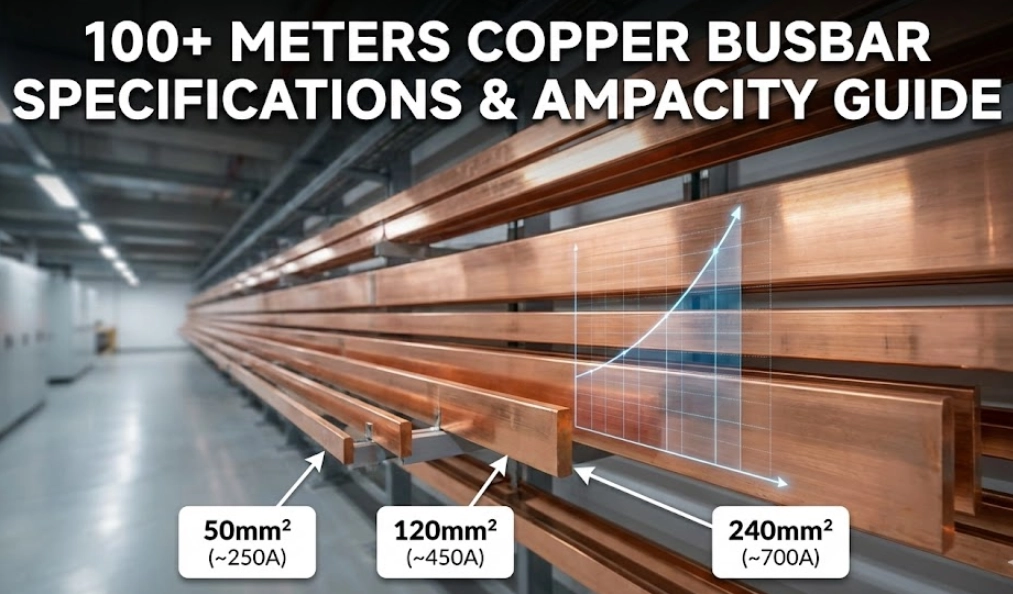
- Common Standard Sizes: 50$mm^2$, 70$mm^2$, 95$mm^2$, 120$mm^2$, 150$mm^2$, 185$mm^2$, 240$mm^2$, and 300$mm^2$.
2. Current Capacity (Ampacity)
The current-carrying capacity is directly proportional to the cross-sectional area of the copper.
- Small/Medium Capacity: A 50 mm$^2$ copper bar typically handles a current range of 200–300 amperes (A).
- High Capacity: A larger 240 mm$^2$ copper bar is generally rated for approximately 600–800 amperes (A).
Note: For long runs (like 100+ meters), voltage drop calculations should also be considered in addition to the standard cross-section specs mentioned above.