






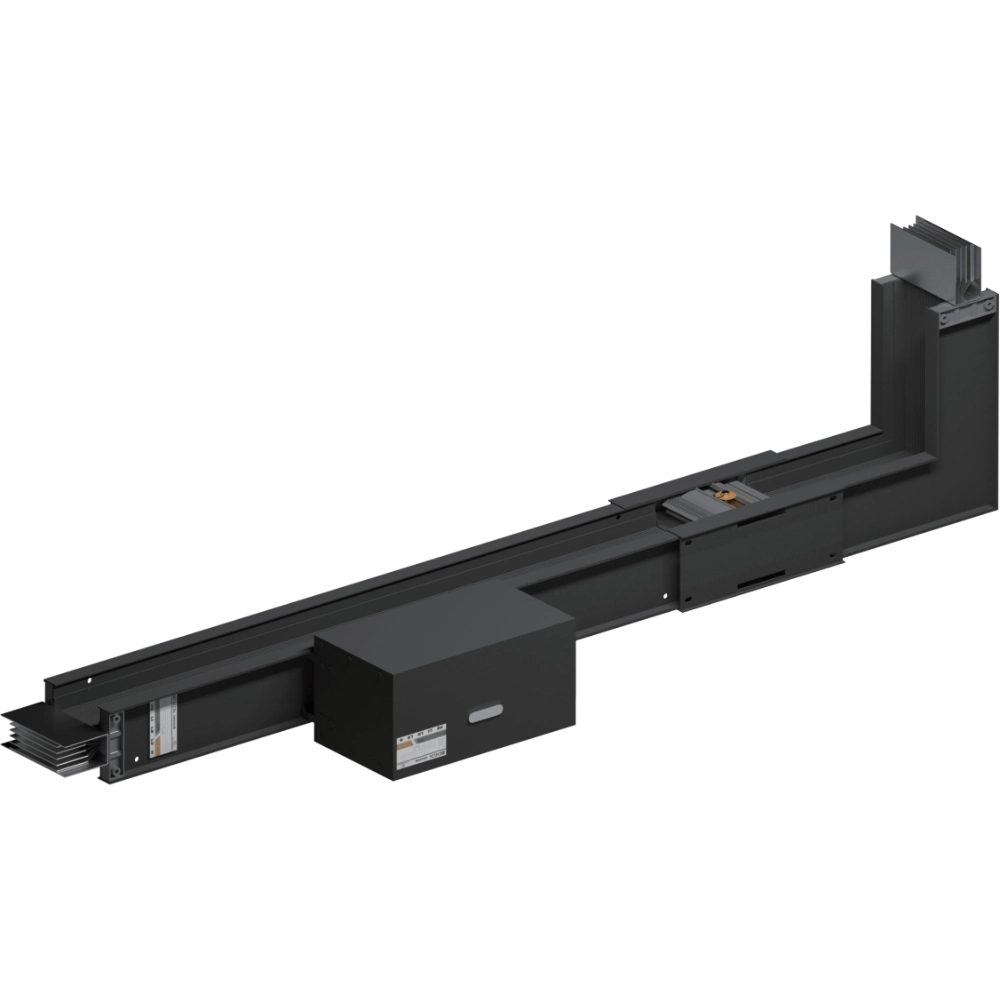
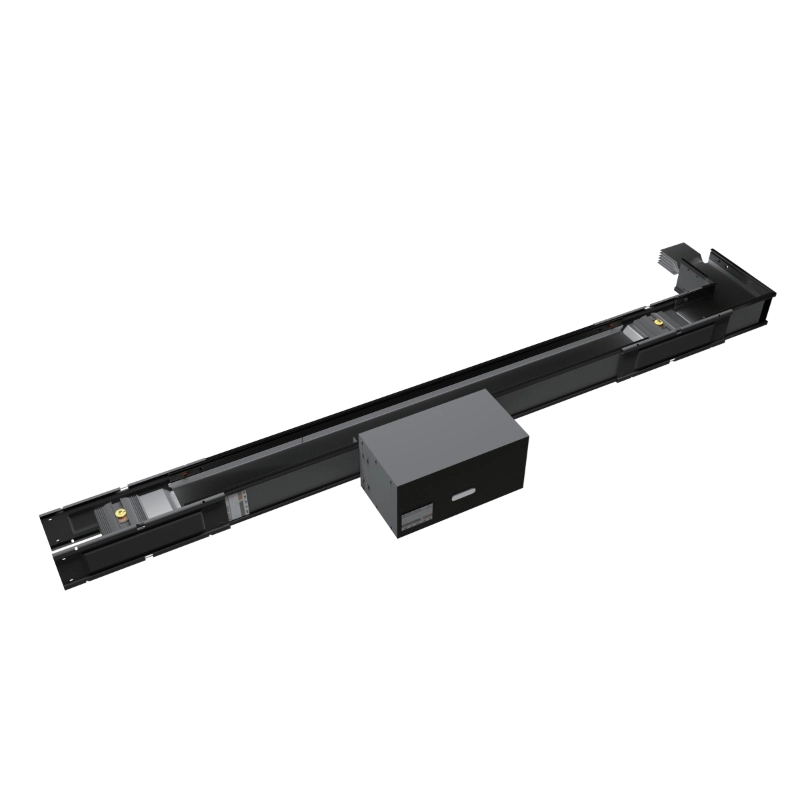


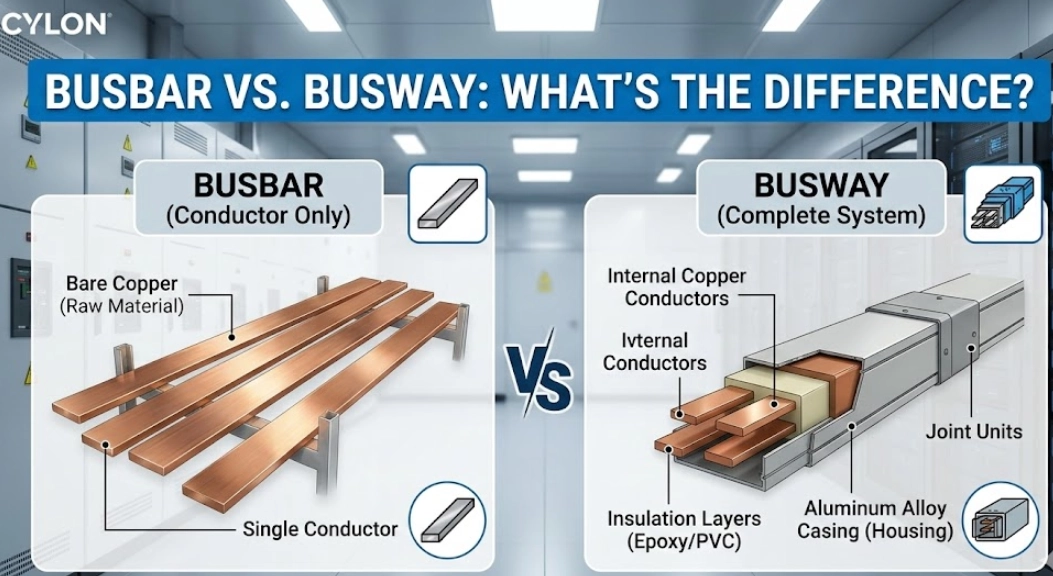
A busbar is the raw, conductive metal bar (typically copper or aluminum) responsible for carrying the electrical current. A busway is the complete, prefabricated distribution system that houses these busbars within a protective enclosure along with insulation and mounting accessories.
a busbar and a busway Core Definition & Composition
The easiest way to understand the difference is that a busbar is a component, while a busway is the entire system.
Busbar: It is the naked conductor itself. It is simply the flat strip or solid bar of conductive metal (like the T2 electrolytic copper or high-purity aluminum we discussed previously).
Busway (or Bus Duct): This is the finished, modular product. It includes the internal busbars, the insulation layers (like epoxy or PVC), the protective outer housing (steel or aluminum alloy), and the joint plug-in units.
a busbar and a busway Application & Location
Their physical placement within an electrical grid differs significantly based on their protection levels.
Busbar: Because they are usually uninsulated or lightly insulated, bare busbars are strictly confined inside switchgears, panelboards, or distribution boards where they are protected from human contact and the elements.
Busway: Since it has a robust external casing, a busway is designed to be routed openly through buildings, factory floors, or even outdoors. It safely transports high-amperage power over long distances from the transformer to the end equipment.
a busbar and a busway Safety & Environmental Protection
Safety ratings apply differently to the component versus the system.
Busbar: Lacks inherent environmental protection. It relies entirely on the enclosure of the cabinet it is installed in.
Busway: Engineered with specific Ingress Protection (IP) ratings (such as IP54 for indoor or IP68 for cast-resin outdoor waterproof types). The enclosure protects the internal busbars from dust, moisture, and mechanical damage while preventing accidental electrocution.
a busbar and a busway Installation & Flexibility
Busbar: Requires precise manual cutting, bending, and bolting by technicians inside a panel assembly plant.
Busway: Manufactured as a modular, plug-and-play system. It comes in standard lengths with prefabricated joints, elbows, and tap-off boxes, making site installation much faster and allowing for future layout changes.