






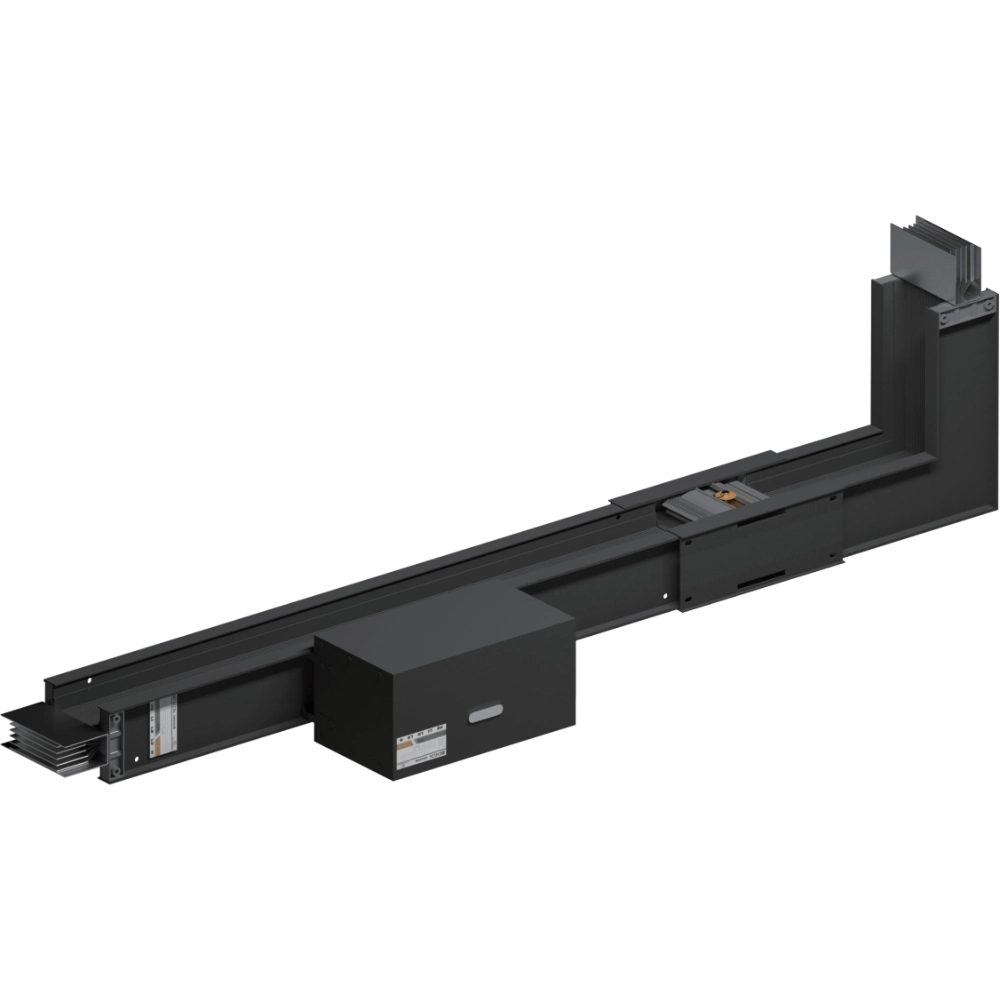
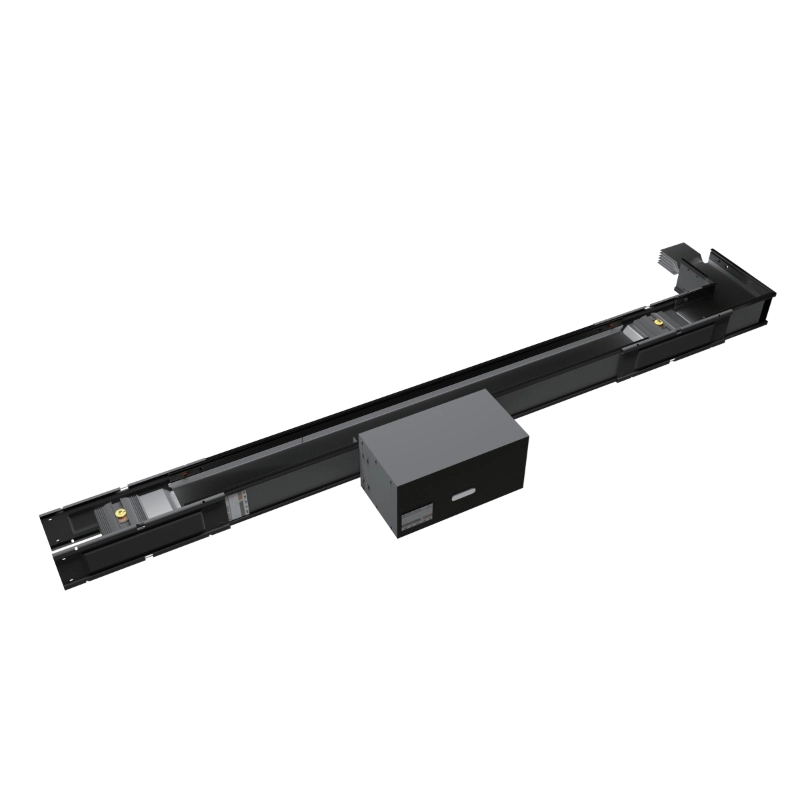


Choosing a prefabricated busway over traditional electrical cables provides superior space efficiency, significantly faster installation, and better heat dissipation for high-amperage power distribution. Because busways are modular, they allow for effortless future expansions and power tap-offs without the need to pull heavy, inflexible wire bundles across your facility.
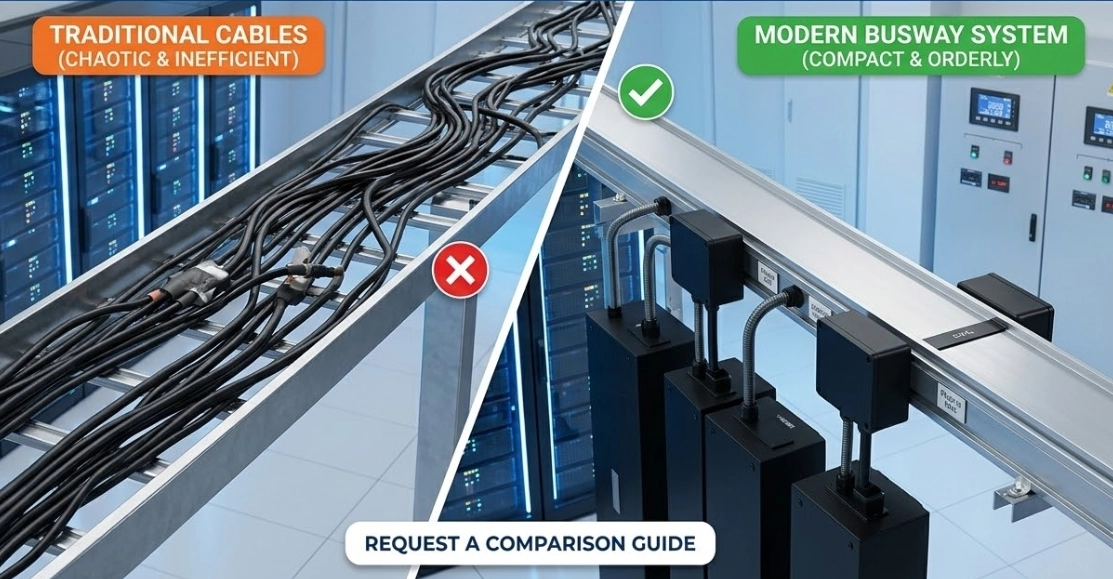
Space Efficiency: A Compact Alternative to Bulky Cable Trays
When dealing with high currents (e.g., 1000A to 6300A), traditional cabling requires multiple thick wires bundled together in massive, space-consuming cable trays. A busway system tightly compresses flat copper or aluminum conductors within a slim, insulated metallic housing. This highly compact footprint saves up to 50% of physical space, making it the ideal power routing solution for data centers, high-rise commercial buildings, and congested industrial facility ceilings.
Installation Speed and Modular Power Distribution Advantages
Routing and pulling heavy electrical cables is incredibly labor-intensive and time-consuming and often requires specialized heavy winching equipment. In contrast, a busway acts as a prefabricated electrical trunking system. It arrives on-site in standardized, modular lengths with factory-designed joint units. This “plug-and-play” mechanical assembly drastically reduces on-site contractor labor hours, minimizes installation errors, and accelerates overall project commissioning times.
Heat Dissipation, Voltage Drop, and Ampacity Performance
Cables bundled tightly in a tray tend to retain heat, which lowers their effective ampacity and increases the risk of thermal degradation over time. A modern sandwich busway features a metallic enclosure (often extruded aluminum alloy) that acts as an excellent heat sink, rapidly radiating heat away from the internal conductors. This superior thermal performance not only enhances fire safety but also significantly reduces voltage drop over long electrical power transmission runs, ensuring high energy efficiency.
Long-Term Flexibility and Lower Life Cycle Costs
If you need to add a new heavy machine to a factory floor wired with traditional cables, you must pull an entirely new circuit from the main switchgear panel. With a plug-in busway system, power distribution is infinitely adaptable. You simply insert a tap-off box (plug-in unit) directly into an available port on the busway exactly where the power is needed. While the initial material cost of a busway might be slightly higher, its zero-maintenance design and ultimate layout flexibility result in a significantly lower total cost of ownership (TCO) over the building’s lifespan.